


 Document
 5520
5520 


Commissioned by the Élysée Palace during a special Defense Council held in January 2024, a report on the Muslim Brotherhood’s strategy of infiltration (entryism) in France was prepared by the Ministries of the Interior and Foreign Affairs. Under the supervision of diplomat Pascal Gouyette and Prefect François Courtade, a group of senior civil servants—tasked in April 2024—visited four European countries and ten French departments, interviewed over 200 individuals (including intelligence officers, religious leaders, researchers, elected officials, and diplomats), and submitted a report to the authorities in July 2024.According to the Ministry of the Interior, the report “highlights a serious threat, characterized by a double discourse combining insularity, concealment, and apparent respect for the rules, with the aim of replacing national unity with new forms of allegiance that break away from the republican tradition.”Ten months later, the government—at President Macron’s request to formulate “proposals commensurate with the seriousness of the findings”—decided to publish a “redacted version” of the report (to protect sources, as is standard when declassifying documents from “Secret Défense” status).The report was described as “damning” by Interior Minister Bruno Retailleau.
Excerpts:
The Muslim Brotherhood operates in its various host countries through concentric circles, with a central “inner circle” composed of sworn members. This structure is highly likely to exist in France, as it does everywhere else in Europe. It would include only a few hundred members. The broader “Brotherhood movement” includes all those who, either in contact with or inspired by this “inner circle,” adopt its methods of action with varying objectives: re-Islamization, separatism, or, at times, subversion.
[…]
Having been present in Europe since the 1950s, organizations linked or affiliated with the movement have seen Europe as a “lifeline,” especially while facing repression in their regions of origin.
Contrary to their strategy in the Middle East—where they engaged in electoral politics by forming political parties—the Muslim Brotherhood has favored in Europe a strategy of influence, or even infiltration, supported by an ideology adapted to the local context and a long-term strategic vision.
Although they have established at the European level a network of structures overseeing national sections—modeled on the Brotherhood’s original organizational blueprint—they have also adapted their operations in each country through a process of inculturation, leading to long-lasting presence, notably in Belgium, Germany, Austria, and the United Kingdom.
A Structured Network of Organizations at the European Level, Especially for Lobbying
The Council of European Muslims (CEM), Keystone of European Structuring
The movement has developed a network of pan-European institutions, most of them based in Belgium near the EU institutions. The Council of European Muslims (CEM) serves as the umbrella organization. Based in Brussels since 2007 (having previously been based in the UK), the CEM meets regularly in Istanbul, where Turkey grants it certain privileges through an agreement with the Diyanet (Turkish Directorate of Religious Affairs).
Created in 1989 under the name Federation of Islamic Organizations in Europe (FIOE), and renamed in 2020, the CEM is the organization most closely tied to the Brotherhood’s inner circle. It coordinates and implements the Muslim Brotherhood’s influence strategy toward European institutions and governments. It is, in this respect, the most significant organization established by the Brotherhood in Europe.
Its affiliation with the OIFM (International Organization of the Muslim Brotherhood) —systematically denied and concealed by its senior leaders—is documented by a range of consistent evidence.
The CEM’s Affiliation with the International Organization of the Muslim Brotherhood (OIFM)
Although no member of the Council of European Muslims (CEM) openly claims to belong to the Muslim Brotherhood, a body of evidence nonetheless suggests an ideological and structural continuum between the CEM and the OIFM. This includes intellectual references to Brotherhood thought, the presence of European leaders in both structures, OIFM participation in CEM meetings, and joint events held in Turkey.
Several leaders hold overlapping positions in both organizations. For instance, Abdallah BEN MANSOUR represents the European region within the OIFM’s Shura Council; Ahmed AL RAWI is a member of the Shura Councils of both organizations; Mahmoud AL IBYARI, a member of the Guidance Bureau and the OIFM’s Shura Council, also holds responsibilities within the CEM’s administrative committee. Helmy ALUALLAR, political chief of Salah ABDELHAQ, the current acting General Guide of the OIFM, attends the CEM’s general assemblies in Istanbul.
The need to formally dissociate the CEM from the OIFM was debated several years ago and resulted in an agreement between the leaders of both entities. While this decision clearly serves a concealment objective, it should be noted that the Egyptian branch of the Brotherhood attempted to coordinate national branches of the movement by establishing the “International Organization of the Muslim Brotherhood” as a formal structure—akin to what the Comintern was for Marxist movements. These efforts were notably pursued in Germany during the 1980s. The structure was intended to be dominated by Egyptian Brotherhood members and aimed to coordinate the activities of national branches.
[…]
The [CEM] organization is formally led by French-Tunisian Abdallah BEN MANSOUR (President of the General Assembly, former president and founder of the UOIF) and French-Tunisian Samir FALAH, who resides in Germany.
According to A. BEN MANSOUR, the CEM has a budget of €300,000 (10% of which comes from donations) and appears to function as a central hub for financing Muslim federations, notably through the activities of its treasurer, German-Egyptian Ibrahim AL ZAYAT. AL ZAYAT chairs the CEM’s Shura Council (a collegial body responsible for strategy) and also serves as a treasurer for Milli Gorus.
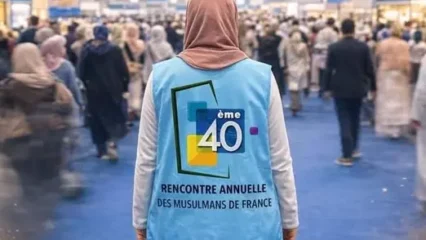
The CEM brings together 28 associations from both EU and non-EU European countries, all of which are the leading Brotherhood-aligned organizations in their respective nations. According to the CEM president, with regard for national contexts, he approved the French branch Musulmans de France’s adherence to the Charter of Principles for Islam in France, despite opposition from the General Assembly. His leadership stance appears more akin to direct command than coordination among equals. The unifying objective between the European branch and national associations is self-protection, particularly in a context where the Brotherhood and its offshoots are under increasing scrutiny by public authorities.
The CEM president states that the organization aims to train the leadership of its member associations through “cultural mediation” conferences, coordinate member organizations to harmonize positions on religious matters—such as the Ramadan calendar (astronomical calculation), prayer times, or the organizational stability of associations in response to mass migration. The CEM is also said to be developing an Islamic education curriculum (available in Arabic and English, but not yet in French).
Having succeeded Samir FALAH in 2022, Abdallah BEN MANSOUR was elected on a platform based on three pillars: education, financial stability, and public relations. He believes the priority is to restore the image of Muslims in public opinion.
The CEM also provides a curriculum to members of the Brotherhood’s inner and outer circles in Europe, focused on the thought of Hassan AL BANNA. This curriculum aims to instill the twenty principles of the Brotherhood’s founder and foster socialization among Brotherhood members across Europe. Future leaders of the movement would be trained in the practice of double discourse and in the fundamentals of respectability—especially avoiding extremist or radical rhetoric. In contrast to publicly disclosed strategic plans, the curriculum materials contain antisemitic references and calls to reject public education.
Implemented by national organizations, the CEM’s guidelines are supported at the European level by a series of affiliated satellite bodies that it coordinates:
– The European Council for Fatwa and Research (ECFR), responsible for issuing legal rulings to reconcile Islamic practice with life in Europe. The ECFR currently has 23 members, including three religious figures from Musulmans de France: Ahmed JABALLAH (vice-president), Larbi BECHERI, and Ounis GUERGUA, who serve respectively at the IESH campuses in Nièvre and Saint-Denis.
– The Forum of European Muslim Youth and Student Organizations (FEMYSO), regarded as the CEM’s youth wing, functions as a training structure for high-potential movement leaders, with strong French participation.
– The European Institutes of Human Sciences (IESH), the movement’s main private higher education institutions in Europe; two of the seven active institutes are located in France.
– Europe Trust, registered in the United Kingdom, is the financial arm of the movement in Europe and supports CEM activities across the continent. Europe Trust and the FIOE (former name of the CEM) shared the same postal address and phone number when the latter was based in London. Europe Trust is also mentioned in early CEM literature, prior to later redactions. Former directors include Ibrahim EL ZAYAT (2005–2014), Fouad ALAOUI, and Ahmed JABALLAH. The fund engages in lucrative real estate ventures, particularly amid dwindling financial flows from the Gulf. It owns £20 million in real estate and presents itself as a charity in the countries where it holds assets, thus benefiting from favorable tax regimes. In 2024, the German bank KT Bank AG—a subsidiary of Kuveyt Türk Bank in Istanbul—closed Europe Trust’s accounts due to increased scrutiny by German financial regulators regarding potential links between clients of German banks and terrorist organizations.
– Islamic Relief Worldwide, a humanitarian organization founded in 1984 by Hany EL BANNA and Essam AL HADDAD. Secours Islamique France was its French branch before becoming independent.
– The European Council of Imams (ECI), dedicated to organizing public events and specializing in imam training and preaching, is chaired by Tunisian national Kamel AMARA. This recently founded organization is particularly active in developing the Brotherhood’s ties with the Balkans. It promotes ECFR’s doctrinal guidelines and coordinates affiliated mosques, notably in France.
– The development of a women’s network was also undertaken via the European Forum of Muslim Women (EFOMW), founded in Brussels in 2012 and dissolved in 2023. Its director was Noura BEN HAMOUDA JABALLAH, wife of Ahmed JABALLAH. Members included figures such as Sayyida OUNISSI, former Employment Minister in Tunisia under the Ennahda party, and Yousra KHERIJI, daughter of Rachid GHANNOUCHI. This network positions itself as a firm opponent of so-called “Islamophobia.”
A Strategy of Entryism into European Institutions
Thanks to its network of organizations, the movement has progressively become, through its various satellite entities, a regular interlocutor of numerous European institutions, where it conducts significant lobbying activity. FEMYSO is listed in the European Union’s transparency register. The CEM has a long-term ambition to influence European institutions through a particular vision of religious freedom, centered on denouncing “Islamophobia,” advocating for the criminalization of blasphemy, and promoting halal certification.
Karim CHEMLAL, head of public relations with European institutions within the CEM, publicly stated in 2019 that he had taken part in meetings on ritual slaughter organized under the aegis of the European Commission. He also called for influencing European policy through the Muslim vote and for creating a think tank working upstream of the Commission’s decision-making process to better steer it.
The European Parliament and its Members are particularly targeted. FEMYSO seeks to present itself as a moderate actor with recognized expertise on Islamophobia and religious freedoms. The youth organization of the movement advocates to MEPs a redefinition of religious freedom that would notably include tightening legislation on blasphemy.
In terms of foreign policy, FEMYSO focuses on the Palestinian issue and on the management of migration flows. For instance, it opposed the appointment of a European Commissioner for European Values, who was to oversee migration issues.
Beyond lobbying, the movement also organizes conferences and training sessions through FEMYSO. Equality Commissioner Helena DALLI has attended at least two events organized by FEMYSO. The European External Action Service has also received training sessions conducted by movement affiliates, such as Sondos ASEM, a former advisor to Mohammed MORSI. FEMYSO is also active through reports and public statements.
European institutions also represent a major source of funding for the movement. Islamic Relief Worldwide and its German branch received €1.2 million in European funding during the years 2018 and 2019 alone.
In France, the Ministry of Higher Education has stated that it now pays close attention to European-scale funding and university mobility programs managed nationally by Erasmus+ France/Education Training (€2.2 billion between 2021 and 2027, with 138,000 students per year). For two years now, it has faced an increase in alerts regarding the funding of projects that go against republican values and are linked to radical Islamism.