


 Islamist entryism
 6024
6024 
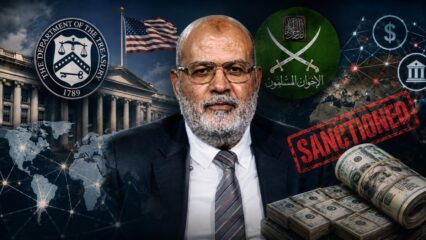
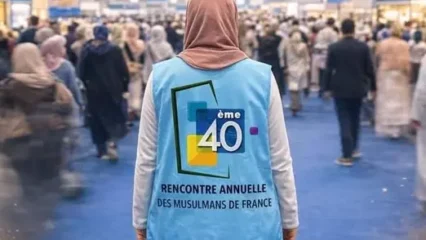


For the first time in recent Swedish history, Education and Integration Minister Simona Mohamsson has announced the launch of a government investigation into what she describes as “the Islamist infiltration of Swedish society.” At the heart of the inquiry lies the Muslim Brotherhood network, accused of exerting growing influence over certain institutions and local political organizations.
This decision marks a major political shift.
For decades, Sweden has held tolerance as its banner and neutrality as its creed. But the age of naivety seems to be over. Faced with the rise of political Islam taking root in neighborhoods, schools, and associations, Stockholm appears ready to turn the page on what critics call “angelic multiculturalism.”
“Political Islam has taken hold in several areas — it now controls schools, entire districts, and even parts of the welfare system. It is also infiltrating certain political parties. This is unacceptable and must be stopped,” Mohamsson, a member of the Liberal Party, told reporters.
She was quick to clarify: “The threat does not come from Islam as a faith, but from Islamist movements that use religion to undermine the very foundations of our democracy.”
In an interview with Expressen, Mohamsson introduced an unprecedented concept: “blue-and-yellow Islam,” a reference to Sweden’s national colors.
It refers, she explained, to integrated Muslims — “those who celebrate both Eid and Christmas, who live their faith within Sweden’s democratic framework.”
These citizens, she said, are now held hostage by Islamist networks that seek to isolate Muslim communities behind rigid cultural and religious barriers.
Mohamsson has pledged a tough response.
The proponents of political Islam, she warned, “want to build parallel societies, preventing Swedish Muslims from living normal lives.”
Her tone hardens: “Islamism doesn’t want constitutions, it wants sharia. It doesn’t want integration, but separation. It wants men to control women and to dictate who may love whom.”
And she adds, “We are not fighting Islam, but the Islamists who distort it to subvert our society.”
To those who fear her initiative could be exploited by the far right, Mohamsson responds bluntly:
“The problem is not Muslims — it’s our past complacency. For too long we have allowed extremists to pose as their representatives. It’s time to end that.”
The Shockwave from the French Report
The Swedish move comes in the wake of the French report released last May, which laid bare the extent of the Muslim Brotherhood’s entrenchment across Europe.
The document, widely discussed, stirred reactions in several European capitals — and Stockholm could hardly remain silent.
The report described Sweden as one of the Brotherhood’s key power hubs on the continent, due to three main factors:
- Qatari funding,
- institutional leniency toward Islamist associations under the banner of multiculturalism, and
- political connections between some of these associations and mainstream parties, notably the Social Democratic Party.
Sweden’s Muslim Brotherhood Network
Officially, the Swedish government says it wants to “map the degree of Islamist influence” within the country.
But many observers believe the damage is already done.
Years of tolerance have allowed a web of associations and private schools to flourish in a legal grey zone, where religion gradually replaces civic norms.
Some of these institutions now operate under confessional standards incompatible with Sweden’s secular and civic values.
At the center of attention is the Islamic League of Sweden, often described as the local branch of the Muslim Brotherhood.
The League denies any formal ties to the Brotherhood — a familiar pattern among the organization’s European affiliates, which rely on strategic denial (taqiyya) to avoid scrutiny.
But for Swedish authorities, doubts have faded: the League’s activities align too closely with the agenda of political Islam in Europe, particularly in matters of funding and community influence.
Mohamsson also condemns the political indulgence of certain officials toward Islamist groups.
She cites the example of Social Democrats in Gothenburg, who provided prayer rooms for groups she describes as “Islamist” — calling it “a counterproductive decision that harms integrated Muslims more than it helps them.”
She concludes: “Islamism is not only a violent ideology; it is also a methodical strategy — a calculated use of democratic tools to erode democracy from within.”
The End of Swedish Neutrality?
The Swedish press has largely welcomed this belated but necessary awakening.
Many editorialists now share the view that the real threat does not come solely from violent extremism, but also from networks operating under the guise of civic engagement to expand their political and economic influence.
The government has already set up a special commission tasked with assessing the extent of Islamist penetration in public institutions, local councils, and taxpayer-funded associations.
The inquiry will also examine funding channels and political connections, often opaque, with certain parties.
This is no longer a mere administrative audit — it is an ideological turning point.
Sweden is redefining its famed “neutrality”: no longer as indifference, but as democratic vigilance.
A new principle summed up in a simple formula:
“Yes to freedom of belief — no to exploiting faith against society.”
By declaring war on political Islam, Stockholm seeks to reinvent the European model of secularism, adapting it to the complex multicultural realities of the 21st century.
A risky but deliberate gamble: to reconcile rights and duties, faith and citizenship, pluralism and national cohesion, and to protect democracy from those who would use its very institutions to destroy it from within.