


 Islamist entryism
 1629
1629 

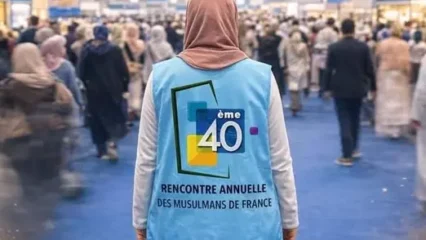


The European Forum of Muslim Youth and Student Organisations (FEMYSO), which has just opened an office in London, has come under scrutiny from Conservative MP Nick Timothy. He is calling on the British government to investigate the group’s suspected links to the Muslim Brotherhood, already highlighted in a recent report by French intelligence services.
Conservative MP Nick Timothy has sounded the alarm over the activities of the European Forum of Muslim Youth and Student Organisations (FEMYSO). The group, which recently set up operations in the United Kingdom, is, according to him, closely connected to the Muslim Brotherhood movement.
In a message addressed to the new Home Secretary, Shabana Mahmood, the former Downing Street adviser denounced what he described as “potential risks to national security and social cohesion.”
“The forum presents itself as an organisation defending the rights of Muslim youth, yet the background of several of its leaders is deeply concerning,” he wrote. Timothy is urging the government to launch a thorough investigation into FEMYSO’s funding sources and networks of influence, warning that a lack of oversight “could enable greater infiltration of the Muslim Brotherhood into European societies.”
A Damning French Intelligence Report
Timothy’s concerns echo those expressed in a report by the French intelligence services, published in May. The document describes FEMYSO as a training platform for high-potential cadres within the Muslim Brotherhood.
According to the report, the FEMYSO goes beyond cultural or student activities and seeks instead to shape a new generation of leaders aligned with the Brotherhood’s ideology. It notably cites Ibrahim El-Zayat, a prominent figure in Germany’s Islamist networks, as a key player in FEMYSO. The report also notes the presence within its leadership of individuals from families close to historical Brotherhood figures — including one of the daughters of Rached Ghannouchi, the head of Tunisia’s Islamist Ennahdha party.
Youth Forum or Ideological Platform?
Founded in the 1990s, FEMYSO presents itself as a European Muslim youth forum promoting civic participation and intercultural dialogue. Officially, it claims to be committed to combating discrimination and fostering inclusion.
However, several European intelligence services view it as a front for a broader political project — that of the Muslim Brotherhood — aimed at influencing younger generations of Muslims in Europe. FEMYSO, they argue, leverages sensitive issues such as identity, minority rights, and Islamophobia to attract sympathisers, some of whom are later channelled into Brotherhood-affiliated networks.
London’s Dilemma
The issue of the Muslim Botherhood’s infiltration is increasingly worrying European governments. France, Germany, and Austria have already tightened their surveillance of associations suspected of links to the Brotherhood, arguing that such organisations promote communalism and religious separatism.
The opening of a FEMYSO office in London could represent a new stage in the Brotherhood’s expansion strategy. The British capital, often described as a “historic safe haven” for Islamist movements since the 1990s, once again finds itself at the centre of the debate over Islamist influence in Europe.
Timothy’s warning comes at a sensitive time. For decades, London served as a refuge for various transnational Islamist currents — including jihadist groups involved in attacks elsewhere in Europe, such as the 1995 bombings in France, whose masterminds were based in the UK.
It was only after the 2007 attacks that British security services adopted a more stringent approach to Islamist organisations.
For now, FEMYSO has not responded to either the MP’s accusations or the French report, likely in an effort to avoid reigniting controversy. However, the issue could soon reach the House of Commons, where lawmakers may debate how best to counter the growing influence of Muslim Brotherhood-linked networks.
The British government is reportedly considering several options:
- Tighter financial oversight: Without outright banning Brotherhood-linked groups, this approach would enhance scrutiny of their activities, funding channels, and influence networks. Stricter transparency requirements could eventually lead to legal action if irregularities were uncovered.
- Discreet security monitoring: Authorities might favour a more measured surveillance strategy rather than overt crackdowns — in order to avoid accusations of Islamophobia or infringements on minority and religious rights. This approach would involve quiet monitoring of Brotherhood circles to pre-empt potential threats or radicalisation.
- Partial or total ban: The most severe measure would be to place FEMYSO on the list of at-risk organisations, effectively prohibiting all or part of its activities in the UK. Yet such a move would be politically sensitive and legally complex, given the influence of certain Islamist associations in Britain and the pressure they exert on authorities under the banner of combating Islamophobia.
A Renewed European Debate
Whatever course London decides to take, the debate over the Muslim Brotherhood’s influence in Europe has been reignited. For many experts, FEMYSO embodies the Brotherhood’s strategy of soft infiltration — using civic engagement and associative activism as a vehicle to shape Islamist elites of tomorrow.
In both London and Paris, authorities face the same dilemma: how to uphold freedom of association while preventing Islamist currents from undermining national cohesion.