


 Platform
 2841
2841 
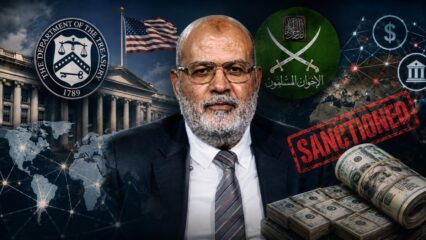


For the past 30 years, through my articles, books, and lectures, I have continuously tried to raise awareness and sound the alarm about the dangers posed by the Muslim Brotherhood Association to our societies—dangers that are even greater for Arab and Muslim societies, which this violent and reactionary entity has helped destroy or plunge into chaos (Sudan, Afghanistan, Somalia, Algeria, Tunisia, Iraq, Syria, Palestine, Libya, etc.).
I should therefore welcome the sudden and unexpected awareness by our political leaders of the Brotherhood’s destructive capacity within our own societies through our immigrant Muslim communities. However, I can only regard the phenomenon with circumspection, given that all initiatives aimed at exposing the Brotherhood’s strategy over the past thirty years and proposing appropriate countermeasures have been met with scorn and rejection by our political, media, and intellectual elites.
In 2004, the reports by Bernard Stasi (Republican Mediator) and Jean-Pierre Obin (Inspector General of National Education), which presented in detailed and documented form exactly the same conclusions as today’s report, were shelved without follow-up and relegated to the archives in 2005—left to the gnawing criticism of the rats. Yet Bernard Stasi (a centrist Christian democrat) and Jean-Pierre Obin (a man of the left close to the Socialist Party) were hardly advocates of identity retreat or anti-immigration sentiment.
This led me, the following year, to write a first warning note on the Muslim Brotherhood (under the title “Chronicle of a Foretold Barbarism”), which I had to publish in Brussels after being warned from various sources that its publication in France would result in my prosecution for racism and “Islamophobia,” along with an inevitable conviction.
In 2011, in my interview-based book with Jean Guisnel published by La Découverte under the title “The Islamist Threat: False Leads and Real Dangers”, I documented and argued the central role of the Brotherhood in fueling jihadist violence as well as destabilizing Muslim countries and émigré communities in the West. It attracted little interest, but it did result in my Wikipedia biography being enriched with several vindictive paragraphs denouncing my Islamophobia and my monomaniacal and pathological obsession with the Muslim Brotherhood—all written in an anonymous article, which, like all content on that friendly “collaborative” encyclopedia, allows neither a right of reply nor any possibility for correction.
In 2014, at his request, I wrote the preface to Egyptian academic Chérif Amir’s book “The Secret History of the Muslim Brotherhood”, published after several years of research by Ellipses and destined for discreet circulation. Despite being thoroughly documented, this work went largely unnoticed and was denied any media coverage.
In October 2018, a symposium organized by the IHEDN (Institute for Higher National Defense Studies), co-sponsored by Regional Association No. 4 (Burgundy) of the Institute and the CNC-IHEDN, on the theme of Salafist indoctrination and radicalization, scheduled to be held on November 22, 2018 in Dijon, was cancelled following a top-level veto issued by the Regional Prefect. Are terrorism and radicalization issues solely within the jurisdiction and competence of prefectural authorities? Apparently so, since, quoting the Prefect’s letter of prohibition: “The Director of the Prefect’s Cabinet, as well as the radicalization officer from the Prefecture, did not wish for civil society and non-profit organizations to be involved in a topic they consider to fall exclusively under their prerogatives.”
The report published today recommends training local government officials in the early detection of indoctrination and separatist phenomena induced by the Brotherhood. This seems like pure common sense, but it is urgent to wait and see how this recommendation will actually be implemented—or whether it will sink into the depths of a risk-averse bureaucracy.
Because, in October 2019, Mediapart published a gleeful article proudly reporting that the president of Paris I–Sorbonne University had decided to suspend sine die the launch of a training course dedicated to the “prevention of radicalization,” which was scheduled to begin in November within the walls of the Sorbonne. Relatively short and organized by the highly respected Professor Pierre Vermeren, a specialist in Arab and Muslim societies, the course proposed that a panel of administrative and community leaders study the emergence of political Islam, the role of jihadism in Salafist doctrine, how democracy and secularism are perceived in the rhetoric of radicalized individuals, fanaticism as the antechamber of violence, and so on. The president of Paris I concluded the rationale for his decision with the following statement: “The issue of radicalization is a major challenge for our society and it is only natural that a civic-minded university should address it, but I believe it is dangerous and reductive to focus solely on Islam.”
At the end of 2020, following the assassination of the unfortunate teacher Samuel Paty (October 16, 2020), Flammarion publishing house contacted me to commission a book on Islamist separatism in France. I submitted the manuscript for Seven Steps to Hell, which analyzes the issue in detail at both the national and international levels, in February 2021. What followed was a long year of hesitation from the publisher, who clearly wished me to discuss Islamist separatism without speaking of Islam—and above all, without mentioning the Muslim Brotherhood. I refused to make any such changes, which delayed the publication of the book until February 2022 and led the publisher to give it only a “minimal service” in terms of media exposure. Despite this, the book sold well, but there now seems to be no plan to reprint it once the stock runs out.
I do not consider myself particularly targeted by the cowardice, pusillanimity, and blindness of our technocratic and intellectual establishment in the face of Brotherhood subversion. My status as a retired provincial gives me the rather inaccessible profile of an “amateur.” But people whose job it is to observe the phenomenon and to alert the public and our political decision-makers truly suffer from this situation in their daily personal and professional lives: Gilles Kepel, tireless observer of Islamism in all its forms and components; Florence Bergeaud-Blackler of the CNRS, who made the mistake of publishing a scientific study under the title Frérisme and its Networks, and has since received death threats, been “abandoned” by her institution, and banned from speaking in nearly all venues; Fabrice Balanche, professor at Lyon II, was stripped of his chair a few years ago, then reluctantly reinstated by order of the administrative court, yet still harassed even during his lectures by masked “anti-racist” activists (see page 30). And the entire cohort of teachers, social workers, and local government officials who are ordered to “not make waves,” to censor their words, to turn a blind eye to Salafist abuses inspired by the Brotherhood in the education system, the healthcare system, public services, cultural and sports associations, public transportation, etc.
In light of all these missteps, I therefore await with great caution the concrete measures that should result from the very recent “discovery” of the subversive and destabilizing role of the Muslim Brotherhood—a role that university researchers and security specialists have been relentlessly denouncing for decades. The effectiveness of these measures, still in the realm of incantation within the gilded halls of Parisian ministerial offices, will have to be judged in the field. We have seen how this kind of purifying itch has fared for more than thirty years. And yet, our shared future and civil peace are at stake.