


 Islamist entryism
 1777
1777 
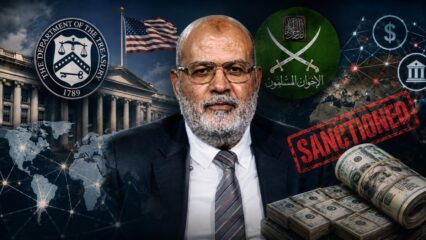



From the exposure of a Russian intelligence breach in 2020 to a new crisis triggered by the infiltration of Brotherhood-linked networks deep within its own security services, Austria is grappling with a succession of security scandals that undermine its strategy against political Islam.
In the latest episode of a seemingly endless security saga, the Viennese press has revealed that an employee of the Directorate for State Security and Intelligence (DSN) — the country’s most sensitive agency — has been arrested for transmitting classified information to the Muslim Brotherhood.
According to the daily newspaper Profil, which broke the story — later confirmed by the Austrian Public Prosecutor’s Office — the suspect held a key position within the counterterrorism department. He is suspected of having acted as a mole working for the Islamist organization.
His role is believed to have gone far beyond leaking confidential data: he allegedly warned Brotherhood figures under investigation of impending raids, enabling them to evade surveillance and circumvent Austrian intelligence operations.
A European Crisis
This new affair once again plunges Austria’s intelligence community into turmoil and reignites an embarrassing question for European intelligence circles:
How can a state at the heart of Europe effectively combat extremism or espionage from hostile states if its own institutions are vulnerable to infiltration?
The case of the “Brotherhood spy” is yet another chapter in a long series of scandals that have eroded the reputation of Austria’s intelligence services among their European counterparts. For years, Vienna has carried the image of a weak link — a system plagued by internal flaws, political interference, and foreign influence.
From the BVT to the DSN: A Poisoned Legacy
In December 2021, Austrian authorities sought to turn the page by creating the DSN, intended to mark the rebirth of a service crippled by past scandals. It replaced the BVT — the Federal Office for the Protection of the Constitution and Counterterrorism — which had been dissolved after a string of high-profile controversies.
A Shocking Raid
In 2018, an unprecedented event shook Europe’s intelligence community: Austrian police raided the offices of the BVT and seized ultra-sensitive documents.
The operation, set against a backdrop of partisan infighting, was widely viewed as a worrying example of political and judicial interference in intelligence work — an institution built on secrecy and discretion.
The incident sent shockwaves through Brussels: Austria was suspended from the Berne Club, a European intelligence-sharing network, and ostracized from international security cooperation within the EU.
Spying for Moscow
Two years later, another scandal erupted. Egisto Ott, a senior Austrian intelligence official, was arrested on suspicion of selling state secrets to Russia.
The investigation uncovered a large-scale Russian infiltration reaching the very core of Austria’s security apparatus.
That same year, another case further tarnished Vienna’s reputation: several Austrian agents allegedly helped Jan Marsalek, the former director of the German company Wirecard, flee to Russia.
Investigations revealed that Marsalek — now believed to be living in Moscow under the protection of Russian intelligence — had benefited from inside assistance within Austria’s security services.
These cascading scandals have turned Austria into a focal point of espionage activity. For many observers, Vienna has become “a rear base for spies targeting Europe.”
The government attempted to respond by completely overhauling its security structure. The DSN replaced the BVT, but the scandal surrounding the “Brotherhood spy” proves that old weaknesses remain unresolved.
War on Political Islam
The Muslim Brotherhood’s decision to infiltrate Austria’s intelligence services is no coincidence. Vienna is considered Europe’s most uncompromising capital in its approach to political Islam. For over a decade, the country has pursued an explicit policy of countering the reach of the Brotherhood, accusing it of “threatening the constitutional order.”
On November 2, 2020, an Islamist terrorist attack struck the Austrian capital. The perpetrator, already known to counterterrorism services, had ties to local Brotherhood-affiliated networks that Austrian intelligence had previously regarded as “moderate.”
The investigation revealed that these networks were far from peaceful; instead, they served as an ideological bridge between political Islam and violent radicalism.
Investigators established the Brotherhood’s involvement in inciting the Vienna attack, assessing that it was most likely an act of retaliation aimed at sending a warning to the Austrian government — a response to Vienna’s restrictions on the transfer of financial and real estate assets belonging to the Brotherhood’s international branch into Austria.
At the time, the “Tanzim al-Dawli” — the Brotherhood’s secret international organization, whose very existence the movement long denied — was planning to discreetly transfer its hidden assets from London to Vienna to protect them from possible freezes, following Donald Trump’s February 2017 threat to designate the Brotherhood as a terrorist organization.
Those fears were later revived by the Qatari funding scandal, exposed in Qatar Papers, the investigative book by French journalists Christian Chesnot and Georges Malbrunot, published in spring 2019.
Operation Luxor: A Failed Masterstroke
The shockwave caused by the findings of the Vienna attack investigation stunned Austrian public opinion and political elites. Under pressure, the government decided to dissolve the BVT and establish the DSN, endowed with stronger oversight and security powers.
Chancellor Sebastian Kurz then declared war on Brotherhood-linked organizations, calling on the European Union to confront what he described as “the challenge of political Islam.”
In an interview with Die Welt, he stated:
“I call for an end to misguided tolerance — for a collective awakening among all European nations to the danger that the ideology of political Islam poses to our freedom and to our European way of life.”
Soon afterward, in July 2021, the Austrian Parliament adopted a law banning the possession and dissemination of Brotherhood symbols, slogans, and publications. Authorities also stepped up their monitoring of associations and cultural centers linked to the movement, as part of their broader strategy to combat “ideological extremism.”
Earlier, on November 3, 2021, the Ministry of the Interior had launched the largest arrest campaign in the country’s history — “Operation Luxor.”
This massive raid targeted more than one hundred individuals and entities suspected of ties to Brotherhood networks.
However, most of the resulting legal proceedings did not lead to convictions, drawing sharp criticism of the DSN for multiple shortcomings and procedural flaws that had marred preliminary investigations and undermined the operation’s effectiveness.
Recent revelations about the infiltration of Brotherhood agents within the DSN’s counterterrorism department now shed light on the reasons behind such a failure: Brotherhood-linked figures and organizations targeted by the raids had been warned in advance by infiltrated spies about the investigations concerning them — allowing them to anticipate searches and destroy evidence that could have incriminated them in court.
A tragic irony: the DSN, born out of the trauma of the Muslim Brotherhood’s involvement in the November 2020 Vienna attack, finds itself, just four years later, infiltrated and spied upon by the very organization it was created to monitor.