


 Exclusive Survey IFOP for Screen Watch
 3805
3805 
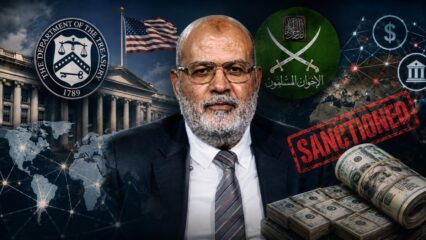



How can the number of Muslim Brothers in France be measured, when members of this Islamist Brotherhood are prohibited from publicly claiming affiliation with it? In the name of the principle of taqiyya (duplicity), active members of Brotherhood organisations are instructed to lie if they are questioned about their membership of the Brotherhood. A survey that merely asked them directly about this would not be very relevant. This is why, with the contribution of researchers specialising in the Muslim Brotherhood, we also developed seven indicators, constituting specific “markers” of Brotherhood ideology, which enable us to gauge the number of Muslim Brothers without asking the direct question of membership of the Brotherhood, thus establishing an “Index of the the Muslim Brotherhood’s secret implanting in France”.
Deprecated: mb_convert_encoding(): Handling HTML entities via mbstring is deprecated; use htmlspecialchars, htmlentities, or mb_encode_numericentity/mb_decode_numericentity instead in /home/taat2607/global-watch-analysis.com_2025/site/plugins/web4wpp-addons/includes/image-signature.php on line 53
As the Muslim Brotherhood cultivates secrecy and “taqiyya”, it is very complex to pin down its nebulous contours. Thus, even if 23% of Muslims in France openly declare their Brotherhood sympathies, they represent only the visible part of the iceberg: these are “external sympathisers” who can express themselves freely, unlike those who are formally structured within the Brotherhood who, for their part, are bound to secrecy and cannot publicly claim affiliation. Because, by taking an oath, they commit to keeping their Brotherhood membership secret.
Fascinated by Freemasonry, which he frequented in his youth in Ismailia, on the edge of the west bank of the Suez Canal in Egypt, the founder of the Muslim Brotherhood, Hassan el-Banna (1906–1949), conceived the Brotherhood as a “secret society” whose members must conceal their affiliation. At their oath of allegiance, they commit to keeping secret their affiliation with the Brotherhood and are instructed to lie if questioned about it, in the name of the principle of taqiyya (duplicity), intended to make this affiliation a closely guarded secret.
This applies not only to the “hard core”, made up of “operational” Brothers (in Arabic: ‘Amil), but also to the “active sympathisers” influenced by the Brotherhood, who do not have ‘Amil status, but the intermediate status of Mouhib (literally: “lover” [of the brotherhood]).
This is why it is illusory to try to define the contours of the Brotherhood movement on the basis of a survey relying solely on the spontaneous statements of those who openly acknowledge being sympathisers of the Muslim Brotherhood.
To overcome this difficulty, we adopted a twofold approach. With IFOP, we developed:
1. A direct questionnaire, intended to survey those who openly claim their Brotherhood sympathies, whom we call the “external sympathisers”;
2. An indirect questionnaire, in the form of an “Index of the secret implanting of the Muslim Brotherhood”, intended to identify the two secret circles of the Brotherhood: that of the Mouhib (“active sympathisers”) and that of the ’Amil (“operational members”).
I- Methodology:
This “index of the Muslim Brotherhood’s secret implanting in France” comprises seven indicators based on questions relating to specific characteristics of Brotherhood ideology. With a dual objective:
1- To distinguish active members of the Muslim Brotherhood from other ultra-conservative Muslims, who share certain Brotherhood ideas or visions (which have widely permeated Muslim societies/communities) without, however, being active members formally structured by the Brotherhood;
2- To differentiate adherents of the Muslim Brotherhood from those of the five other Islamist movements: Salafism, Wahhabism, Tabligh, Takfir and Jihadism. These share with the Muslim Brotherhood the common foundation of Islamist fundamentalism, but differ in their modus operandi (violent or pacifist), their ideological references (radical or moderate) and their organisational structures (secret or overt, legalistic or subversive)…
These indicators were established under the direction of:
· Atmane Tazaghart, editorial director of Screen Watch, author of several works on Islamism, including “La menace Mondiale des Frères musulmans” (GWA, 2022), “AQMI, Enquête sur les héritiers de Ben Laden au Maghreb et en Europe” (Jean Picollec éditeur, 2011); and
· Martine Gozlan, editor-in-chief of Screen Watch, author of several works on Islamism, including “Pour comprendre l’intégrisme islamiste” (Albin Michel 2002), “L’islam et la République” (Belfond, 1994).
Other researchers specialising in the Muslim Brotherhood were involved in the development and validation of these indicators.
CIRCLE A: Conservative Muslims, “external sympathisers” of the Muslim Brotherhood
To belong to CIRCLE A, one must simultaneously choose the answers highlighted in green in the three following questions:
Indicator n°1: Which of the following two statements comes closest to your opinion?
– Religion is a personal belief that relates to faith and must be limited to spiritual life and the practice of worship
– Islam is both a religion and a normative and legal system that must frame all aspects of the life of all Muslims, whether family, social, economic and political

GWA
Indicator n°2: Do you rather agree or rather disagree with the following statement:
“Western societies suffer from a spiritual vacuum and a moral dead end that can only be healed by adopting the moral and spiritual values of Islam”?
– Rather agree
– Rather disagree

GWA
Indicator n°3: Do you rather agree or rather disagree with the following statement:
“To better secure acceptance of Islamic rules by French society, Muslims in France must engage politically within Islamic associations or by supporting parties, candidates or lists of candidates defending the values of Islam”?
– Rather agree
– Rather disagree

GWA
Indicator n°1 refers to the Muslim Brotherhood concept of “global Islam” [Islam Choumouli] which holds that the Islamic religion should not be viewed as a simple belief limited to faith and personal spiritual life, but must also constitute an overall normative framework that frames the Muslim in all aspects (family, social, economic and political) of his life, from birth to death.
Indicator n°2 refers to the Muslim Brotherhood project that aims to establish a “global reign of Islam on earth” [at-Tamkin fil-Ardh], arguing that it will provide “a civilisational response to save humanity from the spiritual vacuum and contemporary moral crises”.
Indicator n°3 refers to the Muslim Brotherhood strategy known as “political Islam” [Islam Siyassi] which consists in advancing Islamic concepts and laws, without resorting to violence, through activism and political, associative and electoral engagement centred on religion and communitarian belonging.
Circle A is the broadest spectrum of the Muslim Brotherhood, made up of ultra-conservative Muslims affected by the growing infusion of the Brotherhood ideas within Muslim societies and/or communities, without, however, being structured within the Brotherhood. One can thus find there Muslims who are not necessarily practising, but who think that Islam is both a religion and a system of governance, or claim that the values of Islam are the only remedy to the moral decadence of the West.
· These are not indoctrinated Islamists, but socially ultra-conservative Muslims, who may be practising or not.
· They are not structured within the Brotherhood, but adhere to its communitarian discourse, which leads them to attend Brotherhood mosques and worship centres (if they are practising) or to take part in Brotherhood associative or charitable activities (even if they are not practising).
CIRCLE B: Islamist adherents of the Muslim Brotherhood, “active sympathisers” of the Brotherhood
To belong to CIRCLE B, one must:
– Belong to CIRCLE A; and
– Identify with the vision of Islam of at least one Brotherhood personality highlighted in green in the following question:
Indicator n°4: Personally, do you identify with the vision of Islam of the following Muslim personalities?
Yes, rather / No, rather not / (You do not know them well enough to express an opinion)
– Sheikh Rifa’a al-Tahtawi (Egypt, 1801-1873)
– Sheikh Mohamed Abduh (Egypt, 1849-1905)
– Doctor Taha Hussein (Egypt, 1889-1973)
– President Habib Bourguiba (Tunisia, 1903-2000)
– Sheikh Hassan el-Banna (Egypt, 1906-1949)
– Sheikh Youssef al-Qaradawi (Egypt-Qatar, 1926-2022)
– President Mohamed Morsi (Egypt, 1951-2019)
– Doctor Tariq Ramadan (Switzerland, 1962- today)

GWA
Indicator n°4 refers to the founding father of the Muslim Brotherhood (Hassan el-Banna) and to the main figures of contemporary Muslim Brotherhood (Youssef al-Qaradawi, reference theologian of global Muslim Brotherhood; Mohamed Morsi, neo-symbol of the Brotherhood’s martyrdom in the Arab world; Tareq Ramadan, the most popular figure of European Muslim Brotherhood.
Circle B is the second circle (narrower than the first), which constitutes the antechamber of the Brotherhood “hard core”. It includes convinced Islamists, sympathisers of the ideology of the Muslim Brotherhood, who consider the Brotherhood figures as the reference thinkers of contemporary Islam, but the Brotherhood will admit them as “operational members” [A’mil] only if their profiles represent a particular interest.
· These “active sympathisers” are not structured within the secret cells that the Muslim Brotherhood designates as “families” [Oussar], but gravitate around its Brotherhood “preaching circles” [Halaqat al-Da’wa]. In a pattern identical to the status of “sympathiser” in Marxist-Leninist parties.
· They are committed to the Muslim Brotherhood cause and take part in its public activities, but the Brotherhood has not (or not yet) admitted them as “operational members” [A’mil];
· They are “muscle” that the Brotherhood uses to give scope to its public activities and spread its thought, but will become “brains” admitted within the Brotherhood’s secret structures, called “Oussar” (“Families”), only if Brotherhood recruiters detect in their profiles a gift or aptitude they consider useful to advance the Brotherhood cause.
CIRCLE C: Hard core of the Brotherhood’s “operational members”
To belong to CIRCLE C, one must:
– Belong to CIRCLE B; and
– Simultaneously choose the answers highlighted in green in the following questions:
Indicator n°5: Do you rather agree or rather disagree with the following statement?
“The Islamic law (Sharia) has a universal vocation to apply everywhere in the world”.
– Rather agree
– Rather disagree

GWA
[Indicator n°6 is asked only of Muslims who think that Islamic law has a universal vocation]
Indicator n°6: Which of the following two statements comes closest to your opinion…?
– Islamic law must be applied by force and coercion
– Islamic law must be established gradually, through preaching, education and awareness, until it is accepted by a majority of society

GWA
Indicator n°7: Which of the following two statements comes closest to your opinion…?
– Democracy is a Western concept incompatible with the principles of Islam
– Democracy can be adopted for Muslim societies and/or communities, provided it is adapted to the context and principles of Islam, such as “shura” (consultation of the governed by the governors)

GWA
Indicators n°5 and 6 refer to the “graduation strategy” and to the Muslim Brotherhood concept of “Tamkin” (establishing a global reign of Islam on earth), which comprises three phases (preaching —> indoctrination —> seizure of power) on the path toward the global application of Sharia.
Indicator n° 7 refers to the Brotherhood concept of “functional democracy” [dimocratiya wadhifiya], which consists in accepting the rules of the democratic game (political parties, elections, governments stemming from the majority), instrumentalising them to gain access to power, while rejecting liberal thought that constitutes the foundations of democracy (respect for minorities, separation of powers, political alternation, freedom of expression and of conscience), on the pretext of the “necessary adaptation of democracy to the Islamic context and to the principles and values of Islam” (Ta’sil al-Dimocratiya).
Circle C is the narrowest circle, constituting the hard core of the Muslim Brotherhood. They are both indoctrinated Islamists and Brotherhood members formally structured within the Brotherhood. Bound by secrecy, they practise “Taqqiya” (duplicity) and never spontaneously acknowledge their membership of the Brotherhood.
· Hardline Brotherhood members, they constitute the “brains” of the Brotherhood’s most restricted circle around which the two other Brotherhood circles composed of sympathisers (external or active) are articulated, which they use as mere “muscle”.
· They are fanatical Islamists, adherents of a universal-scale application of Sharia. But, unlike jihadists or Takfiris, they do not seek to advance their cause through violence, but gradually, through the three phases theorised by the founding father of the Muslim Brotherhood (preaching —> indoctrination —> seizure of power). Their ultimate goal is the establishment of a global Islamic State (caliphate). This is why their strategy can be described as “low-intensity jihadism”.
· The “quest for respectability” is the cornerstone of their political action. To project an appearance of moderation, they present themselves as “Islamic democrats”, an abusive reference to “Christian democrats”. But they view democracy only as a functional means that can bring them to power: “Democracy is like a bus you get on. Once you arrive at your destination, you get off it!”, according to the famous phrase of the Turkish Muslim Brotherhood president, Recep Tayyip Erdogan.
II- Analysis of the results:

GWA
Circle A: “external sympathisers”
For this circle, the two methods (direct questionnaire / secret implanting index) do not overlap: the number of external sympathisers who spontaneously declare their proximity to the movement or the thinking of the Muslim Brotherhood, when they are questioned specifically about it (direct questionnaire), represents 23 to 24% of Muslims in France, i.e. between 874,000 and 912,000 people. By contrast, when they are surveyed, by means of the indirect questionnaire, on their actual adherence to the ideology of the Muslim Brotherhood, to the figures and the founding concepts of the thought of this Islamist Brotherhood, they are only 9.7%, i.e. 193,800 people.

GWA
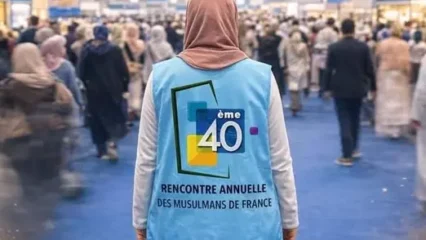
This gap is explained by the fact that, for the broadest category surveyed through the “direct questionnaire”, these are people expressing spontaneous sympathy for the Muslim Brotherhood, without necessarily being in operational contact with the Brotherhood. In their overwhelming majority, they are not true adherents of Brotherhood thought, because they do not know or read the main figures of this thought. And, moreover, only half of them (13% of Muslims in France aged over 15, i.e. 494,000 people) say they are sympathisers of the association “Musulmans de France” (ex-UOIF) which is, however, the French branch of the Muslim Brotherhood.

GWA
However, these people feel sympathy for the Brotherhood because of its “victimisation strategy”, which consists in presenting any criticism or attack against the Muslim Brotherhood as Islamophobia hostile to Islam and to all Muslims. Thus, it is no coincidence that the French branch of the Muslim Brotherhood deliberately chose the name “Musulmans de France”: as a result, any criticism directed at it or restriction of its activities are perceived as hostile actions against all Muslims in France.
As for the sympathisers surveyed through the “indirect questionnaire”, which makes it possible to detect real adherence to the Muslim Brotherhood even when it is concealed, they form a narrower subcategory that includes only the “external sympathisers” genuinely impacted by Brotherhood thought, who are true adherents of it. And it is this subcategory of convinced sympathisers that constitutes the antechamber of the second circle of the Muslim Brotherhood, in other words the ideological breeding ground within which the Brotherhood’s “active sympathisers” called Mouhib are recruited.
Circle B: “active sympathisers” (Mouhib)
The “active sympathisers” (Mouhib, in Arabic) represent 2.4% of Muslims in France, i.e. 91,200 people. Although they are not admitted within the Brotherhood’s secret cells (Oussar, in Arabic), they make up the largest share of the personnel who take part in overseeing the Brotherhood’s public activities and in spreading its ideas and its literature.

GWA
Circle C: the hard core of “operational members”
The hard core of “operational members” (A’mil, in Arabic) represent 2.2% of Muslims in France aged 15 and over, i.e. around 83,600 people. This number is far higher than the estimates of the French intelligence services, which indicate 500 to 600 members of the Brotherhood’s hard core, as stated in the “Report on political Islamism and the Muslim Brotherhood”.
This gap is explained by the strict compartmentalisation of the Brotherhood’s secret cells or “families” (Oussar, in Arabic). Thus, those who are identified and recognised as members of the Brotherhood’s hard core are, in reality, only the visible part of the iceberg: these are those who hold positions of responsibility within organisations, associations, mosques or cultural centres affiliated with the Muslim Brotherhood. The roles they hold make their Brotherhood affiliation an open secret, which intelligence services and the media investigating the Brotherhood movement have no difficulty uncovering.
By contrast, the components and activities of the cells (“families”) that structure the Brotherhood remain secret: they constitute the submerged part of the iceberg, whose members hold no official position and never appear in the organisation’s public activities or structures. It is they who shoulder the largest share of the underground work of the Muslim Brotherhood preaching, Islamisation and indoctrination.