


 Financement du terrorisme
 2823
2823 


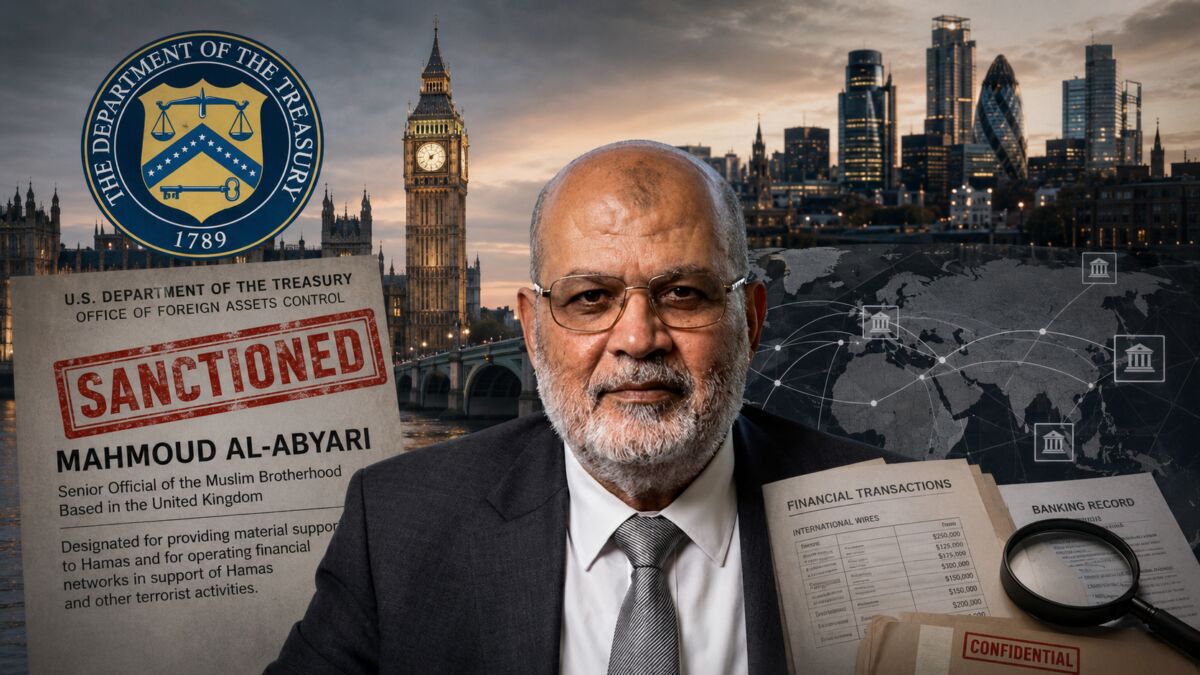
For years, Mahmoud al-Abyari embodied the very paradox of power within the Muslim Brotherhood: occupying one of the organization’s most strategic positions—ranking third in the hierarchy of the International Organization of the Muslim Brotherhood (IOMB), after the Supreme Guide and his deputy—while remaining virtually invisible.
Neither an orator, an ideologue, nor a public figure, this Egyptian activist based in London spent years operating behind the scenes of the Brotherhood, where decisions are made, networks coordinated, and financial flows managed. Yet the discretion that long constituted his greatest asset has now been shattered. On July 23, Washington placed his name on the U.S. Treasury Department’s sanctions list for terrorism financing.
By sanctioning him, the United States is doing more than targeting a single individual. It is taking a new step in its campaign against the financing of Hamas and, more broadly, against the international infrastructure of the Muslim Brotherhood. For the first time, the target is no longer merely a fundraiser, a financial intermediary, or an operative working through a charitable organization, but one of the principal architects of the Brotherhood’s clandestine apparatus responsible for organizing and directing its financial networks.
At 74, Mahmoud al-Abyari belongs to a generation of senior Brotherhood officials who devoted their lives to building the organization’s secret structures rather than representing it publicly. Born on June 5, 1952, and holding both Egyptian and Austrian citizenship, he gradually emerged as one of the leading figures within the “International General Secretariat of the Muslim Brotherhood,” the governing body of the IOMB. Yet his name is largely absent from books devoted to the Brotherhood. Very little information is available regarding his education, his activist career, or the circumstances surrounding his rise through the ranks. This lack of documentation reflects the very nature of his role: that of an organizational insider operating within the Brotherhood’s most secretive mechanisms.
His career is inseparable from London, which has, over the decades, become the principal rear base of the International Organization of the Muslim Brotherhood. Benefiting from a legal environment that has never imposed restrictions on the Brotherhood, the organization gradually developed there an extensive network of companies, associations, foundations, and financial platforms designed to sustain its international reach.
It was within this highly secretive ecosystem that al-Abyari exercised his principal responsibilities. A close associate of Ibrahim Mounir, the former Supreme Guide of the IOMB who died in 2022, he eventually became head of the organization’s General Secretariat, making him the third-ranking official—after the Supreme Guide and the Deputy Supreme Guide—within the Brotherhood’s international leadership. Neither a theologian nor a political leader in the conventional sense, he established himself as the Brotherhood’s shadow financier, responsible for overseeing its secret financial resources: coordinating organizational structures, supervising financial flows, and ensuring the coherence of a transnational financial network spanning several continents.
It is precisely this role that has now placed him squarely in the crosshairs of U.S. sanctions.
In its July 23 statement, the U.S. Treasury Department asserted that Mahmoud al-Abyari played a central role in mobilizing the Muslim Brotherhood’s international financial networks, particularly in support of Hamas. Washington accuses him of participating in fundraising campaigns benefiting two organizations already designated under U.S. sanctions—Filistin Vakfi (Palestine Waqfi) and Hayat Yolu—both identified as financial conduits for the Palestinian Islamist movement.
The sanctions imposed on al-Abyari mark an important evolution in U.S. counterterrorism doctrine. For many years, Washington concentrated its efforts on the financial structures themselves: foundations, humanitarian organizations, commercial companies, currency exchange offices, and informal money-transfer networks. The objective has now shifted toward identifying and targeting the individuals who supervise and establish these mechanisms.
In other words, the United States is no longer seeking merely to cut off the Muslim Brotherhood’s financial flows; it is now targeting those it considers to be the architects behind those networks.