


 Interview
 83328
83328 
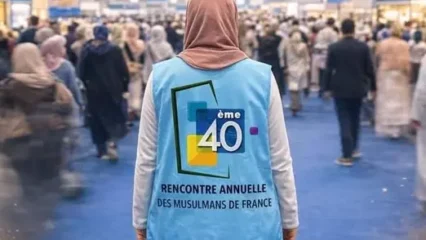


The Islamologist Lorenzo Vidino, whose latest book ‘‘Muslim Brotherhood: the Closed Circle’’, has just been translated into French (Global Watch Analysis editions), has carried out a study, for the Austrian documentation center on political Islam, on the pan-European structures of the Muslim Brotherhood. Published last October, this study (co-authored with Sergio Altuna, 280 pages) constitutes an edifying document on the scale of the Brotherhood’s European tentacles, their mode of operation and their financing.
– You are the co-author, with Sergio Altuna, of a recent study on pan-European structures of the Muslim Brotherhood, carried out for the Austrian Documentation Center on Political Islam. Almost three years after the revelations of “Qatar Papers”, what changes have you observed in the structures and modes of operation and financing of the Brotherhood?
– A general trend that one can observe over the last few years is a relative decline in foreign funding and more funds obtained by Brotherhood entities from the European Union and individual European governments. Brotherhood activists, particularly those of the second, European-born second generation, have become very good at getting public funds to conduct work in areas such as integration, radicalization prevention or countering Islamophobia.
These European funds might not be as big in size as those coming from the Gulf, but they do bring another advantage to the Brothers: legitimacy. Every European grant is for them a certification of legitimacy and moderation, a political capital that they can use to further mainstream themselves. And that is particularly problematic.
– Several studies and investigations seem to indicate that Qatar has passed the baton to Turkey in the area of financing the Muslim Brotherhood. But very often the capital used still comes from Qatar, even if this is now done in a roundabout way. What are the reasons for this new Doha strategy?
– Financing is always a murky area, very difficult to decipher from the outside. The Qatar Papers, for example, shed light on dynamics that were grosso modo known but I don’t think anybody expected the size and capillary nature of Qatar Charity funding of Brotherhood entities in Europe. Having said that, over the last couple of years it has become clear that Qatari funding is no longer as flashy as before. There are indications that it is still happening, of course. But if it is difficult to say whether it’s smaller in size, it is clear that it is generally done with less fanfare than in the past. I attribute this largely to the pressure Doha has been subjected by other GCC countries. Turkey has somewhat stepped in, but not in ways to comparable to what Qatar used to do. But Turkish help has been mostly on the political side, providing backing to European Brotherhood networks through its diplomacy. It will be interesting to see if this will continue now that Erdogan has conducted a very public rapprochement with Egypt and the Gulf countries.
– Despite the successive scandals, the recent illustration of which was the campaign to promote the hijab as a “symbol of freedom”, the Muslim Brotherhood and its associative tentacles continue to find listening, support and funding from European authorities. How do you explain that ?
– I am being deliberately provocative in saying so, but European establishments (not just authorities but also media) are at this stage probably the only sympathetic audience the Brotherhood can find globally. Virtually all governments throughout the Middle East are against them and popular support for them in the region is arguably at its lowest point in their almost 100 year history. Many Europeans are 5/10 years behind in understanding the Brotherhood and its problematic nature. Various reasons contribute to this predicament, but an important one is the ability of the Brothers to present themselves as legitimate representatives of local Muslim communities and moderate alternatives to jihadists and framing all this through the language of integration and democracy. The newer generation, what I call “woke Islamists” even does so with the language of postcolonial theory or speaking of “gendered Islamophobia”—an approach that leads them to create tactical alliances with the most progressive actors of the political discourse. Finally, they have learned to master the accusations of bigotry and Islamophobia against anybody that criticizes them, and that has a paralyzing effect on many Europeans.
– We have observed, for 2 or 3 years, a growing awareness in Europe, and in the West in general, as to the danger of the Muslim Brotherhood, which is the matrix of world Islamism, but European governments are struggling to cope with political Islamism. What are the reasons ?
– Indeed things are changing quite a bit though, particularly in countries like France and Austria, both in terms of governments and public debate. Dynamics change from country to country, but concerns about Islamism are often expressed with increasing nuance and frequency and by people on all sides of the political spectrum. This is very encouraging, as understanding the problem is the first, extremely important but difficult step. But even once that step is taken, what to do about them in a democratic society is a tricky question, as most activities of Brotherhood-linked groups, while unquestionably problematic when considered in their entirety, fall within the law.. Laws in certain countries might punish these behaviours if characterized as part of a larger subversive strategy. But, generally speaking, Islamists operate largely within the boundaries of the law and enjoy a constitutionally sanctioned right to advocate and work for an Islamic order.
– What do you recommend to deal with the lobbying and the entryism policy of the Muslim Brotherhood within political bodies and civil society in Europe?
– Three simple initial steps. First, build knowledge. Many decisions regarding the Muslim Brotherhood in Europe are taken by authorities without in many cases even the most basic knowledge of who they interlocutor are, what their goals are, how they operate. As for any other subject, any policy on Islamism needs to be grounded on awareness. Second, engage but don’t empower. Brotherhood entities are part of the picture and it is difficult for authorities to bypass and ignore them. But any interaction with them should be grounded on awareness on who they are and the clear understanding that treating them as legitimate and moderate representatives of the Muslim community needlessly empowers them. And finally, third aspect and not the least: don’t fund them.