


 Iran
Iran 
 1646
1646 





There are certain court summonses whose dull thud echoes far beyond the mere slam of courtroom doors. The one awaiting Jafar Panahi this Sunday, January 4, 2026, at Branch 26 of Tehran’s Revolutionary Court, resounds like a discordant note disturbing, at the start of the year, the uneasy silence of world cinema.
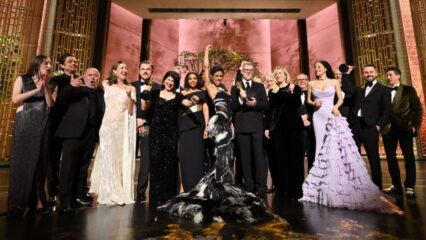
Jafar Panahi is not merely a filmmaker. Over the years, through bans, convictions, and films made against all odds, he has become a moral figure. A man who films as others breathe—because there is no alternative. His latest feature film, A Simple Accident, winner of the Palme d’Or at the most recent Cannes Film Festival and acclaimed on every international stage, was clearly not perceived as a “simple accident” by the Iranian authorities.
For it is indeed this film—its gaze, its freedom of tone, its stubborn determination to show what power would prefer to keep off-screen—that now lies at the heart of the case. In the eyes of the mullahs, this Palme d’Or is not an artistic accolade but a piece of evidence: A Simple Accident is treated as an act of propaganda against the regime. In Tehran, international recognition thus becomes incriminating proof.
The sentence was handed down on December 1, 2025, dry, administrative, relentless: one year in prison, a two-year ban on leaving the country, and internal exile as a horizon—along with a prohibition on joining any political or social organization. All of it pronounced in absentia, as if it were less a man than an idea on trial: that of a free, stubborn, irreducible cinema.
The Iranian lawyer and human rights defender Mostafa Nili confirmed on social media that, following an appeal against the December 1 ruling, the hearing is now set for January 4. A date which, for Panahi, is not merely a judicial appointment but a new stage—tragic this time—on which art is summoned to account for itself before power.
For years, the Iranian filmmaker has turned constraints into cinematic language. Banned from filming? He films anyway. Placed under house arrest? He turns his living room into a set. Reduced to silence? He speaks louder, through cinema. Each trial thus becomes an off-screen extension of his work, each conviction a footnote in the modern history of artistic creation under pressure.
What is playing out in Tehran goes far beyond the Panahi case. It is the age-old conflict between seeing and controlling, between the camera and censorship. Cinema, the art of reality par excellence, becomes intolerable to those who fear being looked at too long, too honestly. And when the Palme d’Or turns into a charge sheet, it is an entire art form that is being summoned before the court.
On Sunday, in the austere chamber of the Revolutionary Court, it will not be only a filmmaker who stands trial. It will be the very idea that a film can be an act of conscience. And as so often, history will remember the work far more than the verdict. For whatever the sentence, the body of work of Panahi—filmmaker of self-denial par excellence—will ultimately triumph over censorship and judicial jihad.