


 Cannes Film Festival 2026
 645
645 




At Cannes Film Festival, some films arrive surrounded by the scent of scandal, while others emerge from a deeply personal necessity. Gentle Monster, the new feature film by Austrian director Marie Kreutzer, belongs to the latter category. Beneath its unsettling, almost ironic title, the film explores the invisible shockwaves unleashed by the discovery of unspeakable crimes at the very heart of family and artistic intimacy.
In 2022, Marie Kreutzer presented Corsage at Cannes, a contemporary and melancholic reinterpretation of Empress Sissi, carried by the magnetic performance of Vicky Krieps. The film was widely praised for its feminist perspective and its deconstruction of the imperial myth. But shortly after its release, reality brutally caught up with the work. Actor Florian Teichtmeister, who portrayed Emperor Franz Joseph, appeared before the Austrian courts for possession of 76,000 child sexual abuse images involving victims aged between 7 and 14. He was sentenced to a two-year suspended prison term. The production team behind Corsage publicly stated that they had been completely unaware of the actor’s actions.
That shockwave now permeates Gentle Monster, a twilight-like and profoundly disturbing work in which Marie Kreutzer appears to confront a dizzying question: what remains of love, trust, and artistic admiration once you discover that the person you admired was living a monstrous double life?
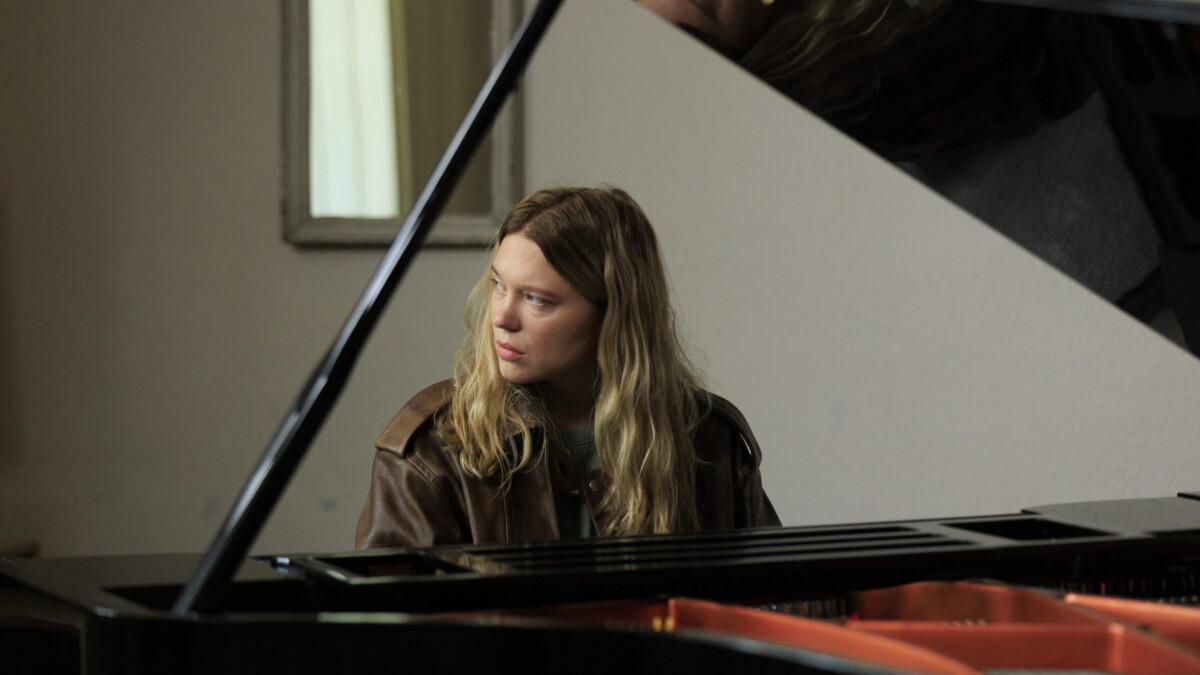
The film follows Lucy, a celebrated artist who leaves the city to settle in the countryside with her husband Philip, a fragile filmmaker recovering from depression, and their seven-year-old son. At first, the setting seems peaceful, almost suspended outside the world. Then reality erupts with brutal force. One morning, the police storm the house and seize all of Philip’s computer equipment. Little by little, Lucy uncovers the scale of the accusations: her partner allegedly accumulated and exchanged hundreds of child sexual abuse files under the pseudonym “Gentlemonster-87.”
Marie Kreutzer deliberately refuses to turn the scandal into spectacle. Where others might have leaned into courtroom thriller conventions or sensationalist storytelling, she focuses instead on the inner collapse of a woman confronted with the unthinkable. Gentle Monster thus becomes a story about peripheral guilt, reflected shame, and the way evil contaminates everyone orbiting around it.
The film also questions the European artistic milieu, its gray areas, and its tendency to separate the work from the artist until the point of rupture. Beneath the surface, Kreutzer seems to revisit her own experience: the collective trauma caused by the Teichtmeister affair and the sense of betrayal that followed the celebration of Corsage at Cannes.
With its cold, restrained, almost clinical direction, Gentle Monster is shaping up to be one of the most uncomfortable — yet necessary — films of this year’s Cannes edition. Not because it seeks to provoke, but because it dares to confront a question cinema often prefers to avoid: how do you go on living when you discover that a monster shared your bed, your dreams, and your everyday life?