


 Editorial
 3202
3202 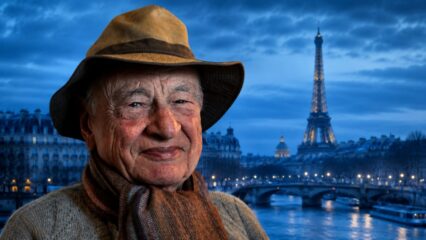


In a deafening silence—the silence of great ideas when they withdraw from the clamor of the world—the Egyptian philosopher Mourad Wahba passed away at the age of 100, leaving behind a void that cannot be measured by the number of books published, but by the rarity of Arab voices capable, like his, of going against the grain of dominant thought. His death represents a major loss for Arab rationalism. It marks a rupture, a stark reminder that philosophy in the Arab world remains an act of resistance, and that the price of such resistance is paid dearly, sometimes long after death.
There are deaths that pass almost unnoticed, and others that leave behind a silence too heavy to be ignored. The death of Mourad Wahba unquestionably belongs to the latter category. Not only because it closes one of the most illustrious chapters in the history of Arab rationalism, but also because it once again exposes the poverty of the contemporary Arab intellectual landscape, where free voices are becoming so rare that they turn into exceptions.
Wahba was not a follower of intellectual comfort or easy consensus. He disturbed, provoked, insisted. He tirelessly reminded us that thought is not a decorative exercise, but an act of rupture. In an Arab world fond of verbal compromises and soft consensus, he assumed the thankless role of the one who asks the wrong questions—those that crack certainties and lay bare the fragilities of dominant discourse.
Mourad Wahba was among those who chose to stand on difficult ground: that of reason when it collides with the sacred, and of questioning when it unsettles established certainties. He was not a philosopher who wrote to please, but to unsettle. Secularism, in his view, was neither a political slogan nor a defensive posture, but a rigorous intellectual construction: the separation of religion and politics as a condition for freeing faith from all instrumentalization and emancipating the mind from any form of tutelage.
Throughout his career, Wahba remained faithful to a central idea: there can be no Arab renaissance without critical thought. It was from this perspective that he never hesitated to reread the Islamic heritage—not to demolish it, but to deconstruct it in order to rebuild it on rationalist foundations. He understood, with acute lucidity, that the secular struggle should not be directed against the legacy of the past as such, but against its abusive sacralization, when it seeks to turn itself into a power that confiscates the present and the future. In this sense, his philosophical project was both an act of courage and a profoundly innovative intellectual endeavor.
His passing brings back to the forefront the question of the role of the intellectual in the contemporary Arab world: what does it mean to be secular in a society that confuses faith with identity, and criticism with blasphemy? Mourad Wahba lived this question daily, paying the price for it—through isolation, marginalization, and often defamation. But like any critical thinker, he knew that a thought is not measured by its degree of acceptance or popularity, but by the ability of its ideas to withstand criticism and the test of time.
Philosophers may disappear as individuals, but the questions they leave behind never die. And Mourad Wahba, through the radical nature of his rationality and his fidelity to secular and humanist values, leaves his disciples—among the heirs of Arab rationalism—facing a burning question: who will still dare to say “no” to uniform thinking, when a docile “yes” becomes the most direct path to intellectual consecration? As if, at the moment of his departure, he were writing a final appeal to the Arab rationalist spirit, which today—more than ever—needs dissonant voices like his to pull it out of its long slumber.