


 Tribute
 1662
1662 


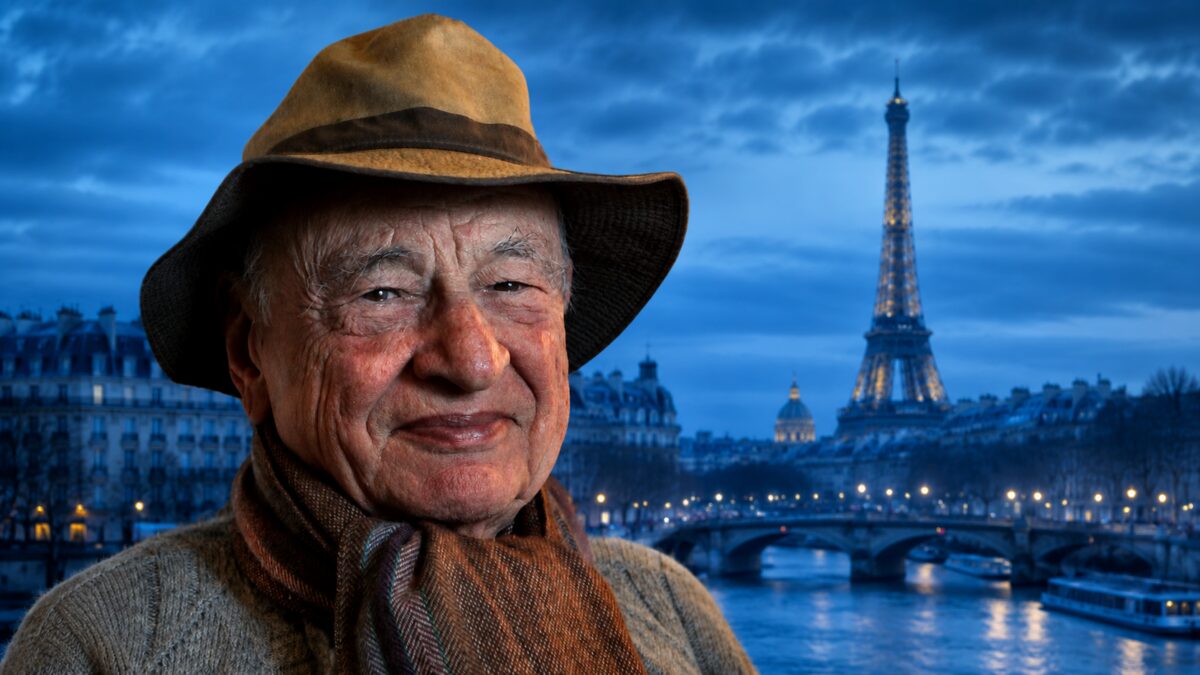
French philosopher and sociologist Edgar Morin passed away at the age of 104, leaving behind a monumental body of work and a vision that profoundly shaped the contemporary human sciences. With his passing, France loses one of its greatest intellectual figures, and the world loses one of the rare thinkers who traversed an entire century without ever ceasing to question his times.
A member of the French Resistance during World War II, a keen observer of the transformations of the modern world, and a tireless advocate of humanist fraternity, Edgar Morin devoted his life to understanding the invisible connections that unite individuals, societies, and civilizations.
Thinking the Complexity of the World
Edgar Morin’s work is inseparable from a concept that has become central to contemporary thought: “complex thinking.” Contrary to approaches that divide scientific inquiry into isolated compartments, he advocated a holistic vision capable of linking different forms of knowledge and grasping their interactions.
According to him, humanity’s major questions—whether political, ecological, cultural, or scientific—cannot be understood through a single discipline alone. Reality is made up of interdependencies, uncertainties, and contradictions. This conviction permeates his major work, The Method, a vast intellectual fresco published in six volumes between 1977 and 2004.
This ambition to connect knowledge led him to become one of the most perceptive critics of the fragmentation of modern learning. For Morin, understanding the world required transcending the boundaries between science, philosophy, sociology, biology, and anthropology.
An Intellectual Engaged with His Century
Edgar Morin was not merely a theorist. His entire life was marked by engagement and action. As a young man, he joined the Resistance against Nazi occupation. This formative experience would permanently shape his reflections on barbarism, democracy, and the fragility of human societies.
Throughout his career, he opposed dogmatism in all its forms. A former communist activist, he broke with ideological orthodoxies whenever they conflicted with the demands of intellectual freedom. This independence of mind became one of his defining characteristics.
Faced with the great upheavals of the twentieth and twenty-first centuries, he consistently defended dialogue, democracy, and mutual understanding. He denounced identity-based withdrawal, exclusionary nationalism, and confrontational logics that threaten contemporary societies.
Struggle for Planetary Consciousness
Among Edgar Morin’s major causes was the promotion of a universal consciousness grounded in the idea that humanity shares a common destiny. Early on, he warned about ecological risks, the imbalances generated by uncontrolled globalization, and the threats facing peaceful coexistence among peoples.
In Homeland Earth, written with Anne-Brigitte Kern, he called for thinking of the planet as a community of shared destiny. Long before climate issues became central to public debate, he was already advocating global solidarity capable of addressing worldwide challenges.
This humanist vision also led him to focus on education. In The Seven Complex Lessons in Education for the Future, written at the request of UNESCO, he urged a rethinking of education to prepare future generations to understand the complexity of the world rather than merely accumulate fragmented knowledge.
A humanitarian legacy for future generations
Among his most influential works are also Introduction to Complex Thought, which helped disseminate his ideas to a broad audience; Man and Death, a major reflection on the place of death in human societies; and The Spirit of the Age, a pioneering analysis of mass culture and the media.
Until an advanced age, Edgar Morin remained an active participant in intellectual debates, commenting on contemporary crises, ecological challenges, technological transformations, and threats to democracy. His exceptional longevity allowed him to transmit a unique experience, condensed in several autobiographical and contemplative works, including Lessons from a Century of Life.
With the passing of Edgar Morin, a certain idea of the intellectual fades away: that of a man capable of combining knowledge, commitment, and openness to the world. His legacy extends far beyond the boundaries of sociology or philosophy. It resides in a way of thinking grounded in doubt, dialogue, and the constant search for connections between human beings and forms of knowledge.
At a time when crises are multiplying and simplistic narratives are gaining ground, Edgar Morin’s thought remains strikingly relevant. He leaves us with a precious invitation: to learn to inhabit the complexity of the world rather than deny it. It is perhaps there that the true legacy of his work resides.