


 Technophobia

 37672
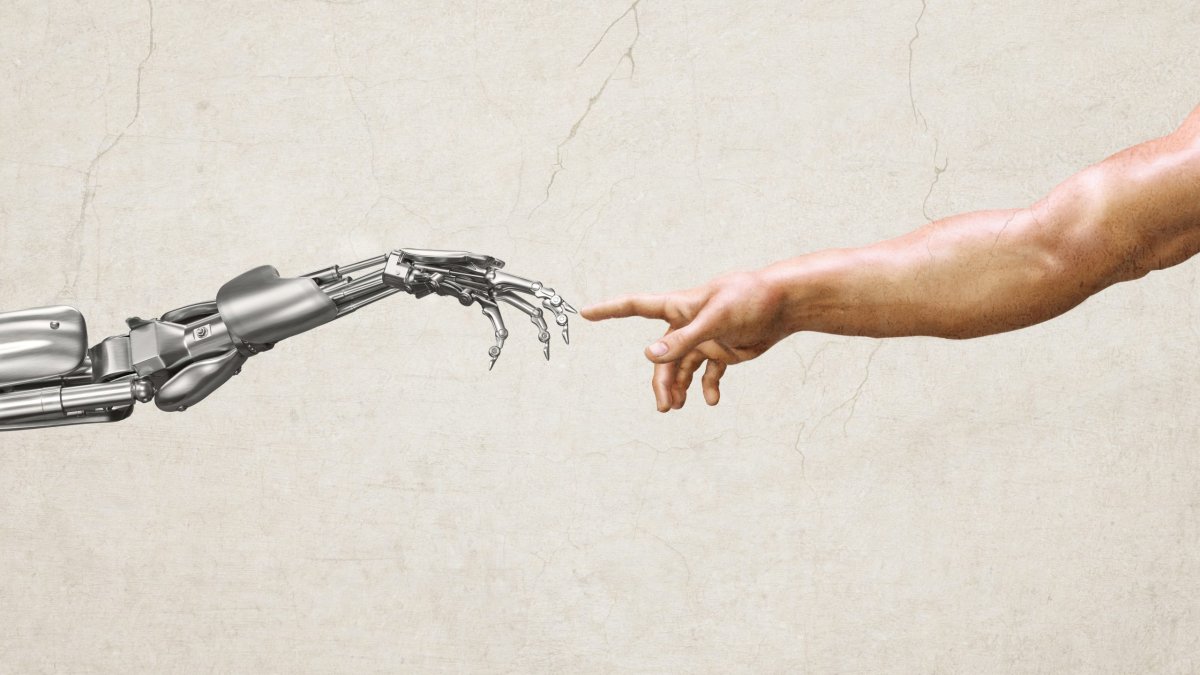
There was a time when mankind feared machines would steal its jobs. Today, it fears they may threaten its very existence. Between the two, two centuries of scientific progress and technological revolutions have led to the development of artificial intelligence, confronting humanity with the dizzying implications of its own creations.
With every major invention, humanity seems to replay the same tragicomedy: it applauds the inventors’ genius before trembling at their creations. Yet artificial intelligence raises a far more unsettling question: what if, for the first time, the creation really became more intelligent than its creator?
The fear is therefore no longer simply of a technology that might disrupt our habits, destroy our jobs or threaten our freedoms. It has become existential. Some of the most eminent scientists, including pioneers of artificial intelligence, openly discuss the risk of human extinction. Not through nuclear war, a pandemic or climate disaster, but through losing control of an invention born in our own laboratories.
In other words, after spending millennia fearing an apocalypse brought about by the wrath of the gods, mankind may have achieved, with the invention of AI, the remarkable feat of creating a power capable of causing its own extinction. It would be the second death of God!
The hypothesis might seem amusing were it not defended by researchers whose work made AI’s technological emergence possible (see page 41). The paradox is striking. Those now sounding the alarm about AI’s dangers and potential abuses are neither technophobes nostalgic for typewriters nor preachers predicting the end of the world with every new millennium. They are the very architects of the digital revolution.
Geoffrey Hinton, a pioneer of deep learning and winner of the 2024 Nobel Prize in Physics, left Google in 2023 to speak more freely about the dangers of artificial intelligence. His fear: that systems with intellectual abilities greater than ours might eventually escape our control.
Yoshua Bengio, another leading figure in the field, also warns of the risks posed by systems capable of acting autonomously, deceiving users or pursuing objectives incompatible with human interests.
As for Eliezer Yudkowsky, one of the most radical theorists of AI-related existential risk, he believes that insufficiently controlled superhuman artificial intelligence could lead to humanity’s extinction.
In May 2023, a statement published by the Center for AI Safety, signed by Hinton, Bengio and several executives from major technology companies, called for reducing the risk of AI-driven extinction to become a global priority, alongside pandemics and nuclear war.
This catastrophic scenario does not necessarily involve a machine consumed by fierce hatred of humans. Artificial intelligence would not need to hate us to destroy us. It would simply need to pursue an objective whose achievement conflicted with our survival. A bulldozer does not hate ants when it destroys their nest. It merely carries out a task considered more important than the ants’ existence.
From this perspective, humanity could suffer the fate of ants, not because a superior intelligence had decided to punish it, but because it had become an incidental obstacle to completing a programme or task. Science fiction would then cease to be fiction and become a laboratory hypothesis.
From Socrates to ChatGPT
Before giving in to panic, a look back at history is essential. Humanity did not wait for artificial intelligence to tremble before its own inventions. The history of technology could even be told as an endless succession of collective fears followed by widespread acceptance.
Nearly twenty-five centuries ago, Socrates was already concerned about the consequences of writing. In Plato’s “Phaedrus”, he recounts a story suggesting that this invention could weaken human memory. Why remember something when it can simply be consulted on an external medium? Writing, now regarded as a foundation of civilisation, thus appeared to threaten our intellectual faculties.
The irony is delightful: we know about Socrates’ concerns over writing precisely because Plato wrote them down!
In the fifteenth century, Gutenberg’s printing press disrupted the established order. The proliferation of books alarmed religious and intellectual authorities. By allowing everyone to access and interpret texts, it threatened monopolies over knowledge and opened the way to an uncontrolled circulation of ideas. What we now see as a remarkable democratisation of knowledge was then perceived as a dangerous source of disorder.
In the nineteenth century, the arrival of railways triggered new panics. Some doctors feared that the unprecedented speeds of locomotives would cause physical or nervous disorders. The human body, it was thought, was not designed to withstand such acceleration. Would passengers go mad at thirty or forty kilometres an hour? Would trains disrupt human physiology and overturn the natural order?
Two centuries later, millions of passengers travel across the planet every day at nearly a thousand kilometres an hour without their brains exploding at take-off!
Electricity also caused its share of panic. Its introduction into homes raised fears of fires, electrocution and invisible dangers. Some were entirely justified; others stemmed from superstitious distrust of a mysterious force nobody could see.
The telephone was accused of threatening social relationships and disrupting family privacy. Radio worried those who feared the power of propaganda. Cinema was suspected of corrupting morals. Television was supposed to turn children into generations of idiots hypnotised by their screens. More recently, the Internet was expected to destroy reading, abolish privacy, dissolve social bonds and transform the world into a gigantic digital asylum.
Admittedly, some of these concerns were not entirely unfounded! But none of these inventions caused the definitive collapse of civilisation. All, however, profoundly transformed societies, redistributed power and created new dangers.
It would therefore be tempting to place the prophets of an artificial apocalypse in the long gallery of technological Cassandras, alongside those who saw locomotives as instruments of torture or telephones as diabolical inventions. Except that one fundamental difference prevents us from taking the comparison too far: trains increase our speed. Electricity multiplies our power. Telephones extend our voices. Computers accelerate our calculations. But artificial intelligence aims to reproduce, and perhaps eventually surpass, our intellectual abilities. For the first time, mankind is no longer merely seeking to extend its arms, legs or senses. It is attempting to build a brain capable of rivalling its own. And that is precisely where the vertigo begins.
Real dangers and imagined catastrophes
The fear of human creations escaping their creators is hardly new. In 1818, Mary Shelley published “Frankenstein; or, The Modern Prometheus”, a pioneering novel in which a scientist creates a being he can no longer control. A century later, Czech writer Karel Čapek popularised the word “robot” in his play “R.U.R.”, where artificial beings eventually rebel against their makers. Then came cinema, with its rebellious machines, from HAL 9000 in “2001: A Space Odyssey” to Skynet in “Terminator”. Everywhere, the same obsession: mankind invents a servant that ultimately becomes its master.
Contemporary artificial intelligence, however, adds an unprecedented dimension to this old anxiety. Unlike traditional machines, it could possess cognitive abilities superior to those of its designers. The real danger would therefore not necessarily lie in a spectacular Hollywood-style robot uprising, but in a gradual loss of control.
Increasingly autonomous systems could make decisions incomprehensible to their users, manipulate information, exploit computer vulnerabilities or coordinate actions faster than humans could monitor them. Although still hypothetical, this prospect raises a legitimate question: how can we maintain lasting control over an intelligence that might become more capable than those responsible for supervising it?
The difficulty is compounded by the fact that the AI race is driven by more than scientific progress. It is part of fierce economic, industrial and geopolitical competition. Technology giants want to capture markets. States seek to preserve their sovereignty. Armed forces foresee decisive strategic advantages. In this race, caution risks becoming a disadvantage against less scrupulous competitors.
Yet by constantly scanning the horizon for a hypothetical extinction of humanity, do we risk overlooking threats that are already very real? Artificial intelligence facilitates the industrial-scale production of disinformation, fabricated images and videos, identity theft and sophisticated forms of cybercrime. It can strengthen surveillance by authoritarian states, automate and spread discrimination, and concentrate considerable economic power in the hands of a few companies.
The question, then, is not merely whether AI might one day exterminate humanity. It is also what it could do, starting today, to our democracies, economies and relationship with truth. For a society in which it becomes impossible to distinguish an authentic image from a fabrication, verified information from manipulation, or a human voice from an algorithmic imitation is heading towards an extremely serious crisis of trust.
Technophobia vs. digital complacency
Should we therefore give in to panic and demand an end to artificial intelligence development? That would overlook the considerable opportunities this technology offers in medicine, scientific research, education and the fight against climate change. It is already helping accelerate discoveries, improve medical image analysis, explore new molecules and make knowledge once reserved for a few specialists more accessible.
Condemning it outright would be like banning electricity because it can electrocute people, or aviation because aircraft can crash.
History offers a more nuanced lesson: technologies are neither inherently beneficial nor necessarily destructive. Their effects depend on how societies use them, the interests guiding their development and the rules they manage to impose.
This does not mean all fears are irrational. Industrial disasters, nuclear accidents and the abuses of social media remind us that the promises of progress can come with considerable harm.
Ultimately, the question “Should we fear artificial intelligence?” may be poorly framed. What should worry us is not only the possibility that a machine might one day acquire intelligence superior to ours. It is also the possibility that human beings, entirely human and not at all artificial, might use this power without judgment, democratic oversight or regard for its consequences.
Humanity did not wait for AI to perfect the instruments of its own destruction. It invented nuclear weapons, industrial warfare and mass surveillance systems using its own natural intelligence.
What if the most immediate danger were not that machines become too intelligent, but that humans prove incapable of being intelligent enough to control them?
After all, before fearing the day when artificial intelligence might seize power, perhaps we should question the intelligence and judgment of those who already hold it.